Central Texas MUD Taxes and PID Assessments: What Homebuyers Need to Know
Buying a home in the Austin area involves more than comparing purchase prices, mortgage payments, and HOA fees. Two homes with the same price can have significantly different monthly ownership costs because of Municipal Utility District (MUD) taxes and Public Improvement District (PID) assessments. These additional costs are especially important to understand when considering new construction homes in Austin, Dripping Springs, Kyle, Buda, New Braunfels, and other growing communities along the Austin-to-San Antonio corridor.
One of the biggest surprises for homebuyers is that a community advertising a lower property tax rate may not necessarily be the more affordable option. Separate PID assessments and MUD taxes can add hundreds of dollars to your monthly housing expenses. To help you understand these costs, we'll look at real examples from Headwaters in Dripping Springs, Anthem in Kyle, and Six Creeks, explain how MUDs and PIDs work, and explore the Texas homestead exemptions and property tax benefits that could affect your budget.
I help buyers and relocating families find the right homes throughout the Austin suburbs and Texas Hill Country, including communities between Austin and San Antonio. Understanding the true cost of homeownership is an important part of making a confident buying decision. Before choosing a home, it's essential to look beyond the listing price and understand all the property taxes and assessments that may apply. If you're planning a move to the Austin area or surrounding communities, give me a call or send me a text at 512-557-9576. I'd love to help you compare your options and understand the costs before you buy.
Table of Contents
- Understanding MUDs and PIDs in Central Texas
- Headwaters: MUD Taxes in Dripping Springs
- Anthem: Kyle's MUD Tax Example
- Six Creeks: The PID Assessment Reality
- Comparing the True Monthly Cost of a $500,000 Home
- Texas Homestead Exemptions: The $140,000 Savings
- Over-65 Property Tax Benefits and the School District Tax Ceiling
- Moving to Texas After 65: What You Can and Can't Transfer
- The 10% Homestead Appraisal Cap
- New Construction Tax Bills: Why Last Year's Taxes Don't Tell the Whole Story
- Which Cost Structure Is Right for You?
- Conclusion
Understanding MUDs and PIDs in Central Texas
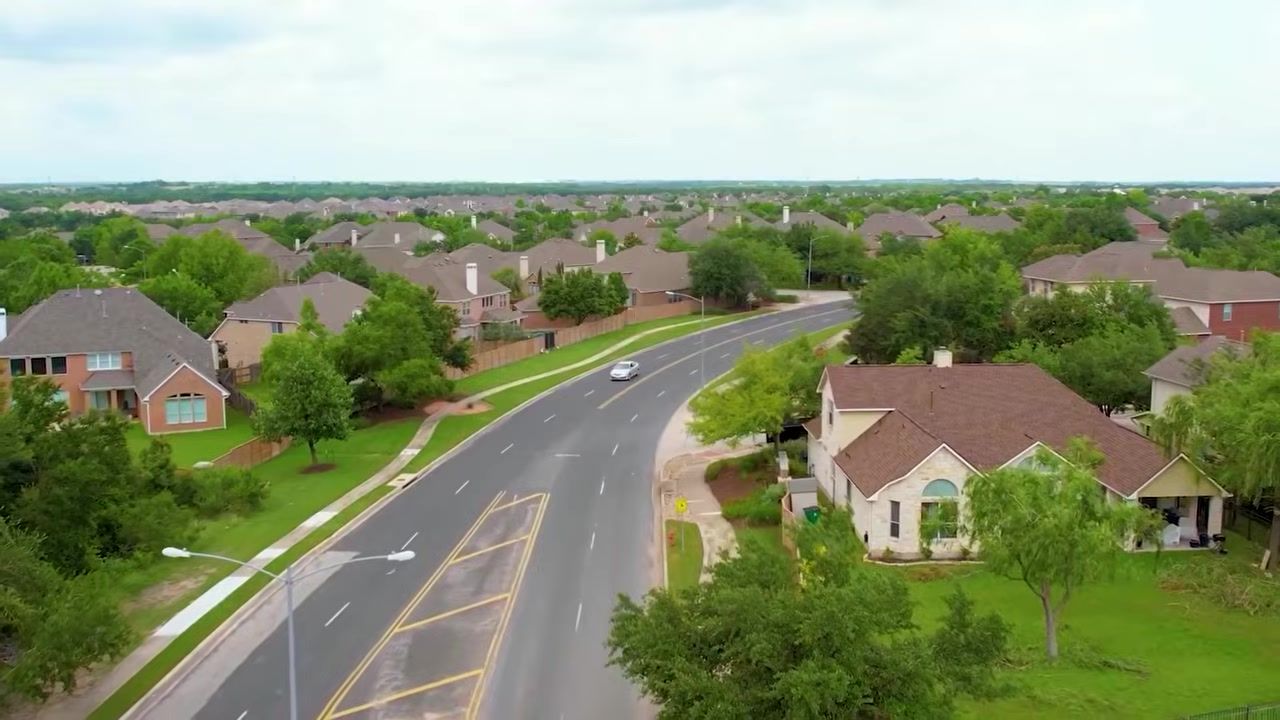
Let's start with why these even exist. Think about all the infrastructure needed to build a new neighborhood: roads, water lines, sewer systems, drainage, and sometimes other public improvements. Somebody has to pay for all of that, and depending on how the community was developed, some of those costs can be financed through special districts.
The two you're going to hear the most often are MUDs and PIDs. They're very different though. A MUD is a Municipal Utility District. It's a special government district that can levy property taxes, often to help finance and operate infrastructure. A PID is a Public Improvement District. Instead of necessarily adding another property tax rate, it can place a separate assessment on the property to fund public improvements.
Neither one automatically means a community is bad or that you shouldn't buy there, but you absolutely need to know what you're paying because they work very differently. And I want to show you how that difference affects your monthly budget. A lot of the growth around Central Texas has happened in areas where developers need infrastructure before thousands of homes could be built. That's where these utility districts come in, and a MUD can issue bonds to pay for eligible infrastructure, and property owners within that district help repay that debt through their property taxes.
When you look at a property's total tax, you may see the county, school districts, emergency services, and then a separate MUD tax. And these can all add up.
Headwaters: MUD Taxes in Dripping Springs
Let me give you a real example. Headwaters is a master-planned community in Dripping Springs. According to its district published information, the Headwaters MUD tax for 2026 is $0.90 per $100 of taxable value. That works out to be 0.9%.
Let's say you have a home with a taxable value of $500,000. That MUD portion alone could be $4,500 a year. That's $375 a month. And remember, that's just the MUD. You're still paying for other applicable property taxes. So when you're looking at a home in Headwaters, you can't take that $0.90 MUD rate and automatically assume that's how much more expensive the community is compared to everywhere else. Different properties have different combinations of taxing jurisdictions, and a home outside of city limits, for example, may not have city property tax. That's why you have to look at the entire tax rate, not just a piece of it.
Something else buyers ask me is whether MUD taxes eventually go away. They can change over time as developments progress and bonds get repaid and district financial needs may change, but that doesn't mean your MUD rate is guaranteed to go down in five to ten years. Some districts can issue additional bonds, and a district may continue operating even after certain debt is paid off. If somebody tells you the MUD tax is temporary, I would want to see the district's actual financial information before making that assumption. I typically do not see MUDs just going away, especially for the time that most buyers live in their house.
Anthem: Kyle's MUD Tax Example
There's another community in Kyle called Anthem , and their MUD tax is actually 1%. That's $1 per $100 of taxable value for 2025. On that same $500,000 house taxable value, that's $5,000 annual just for the district portion.
Now, this is important. You can't take those numbers and automatically assume that's how much more expensive these communities are compared to everywhere else. Different properties have different combinations of taxing jurisdictions, and a home outside of city limits, for example, may not have city property tax. That's why you have to look at the entire tax rate, not just a piece of it.
And something else important: taxes can still go down. If your calculated school taxes decrease below your ceiling, you pay that lower amount. There are also adjustments that can reduce the ceiling under Texas law, but there are a couple of exceptions. If you add a major improvement to your property, like you add an addition like a garage or a new room, that can increase your tax ceiling. Routine repairs and maintenance generally don't have any kind of effect on this. This is just talking about improvements to your house. And your other taxing districts are a separate conversation. Your county taxes, city taxes, and MUD taxes may still change.
Six Creeks: The PID Assessment Reality
Now, PIDs are a little different, and this is where I think buyers can get confused. PIDs are fairly new to the Central Texas area. Because with a PID, you might see a property tax rate advertised at 1.8% or 2%, and you think you're getting a better deal than another neighborhood, but there could be a separate annual assessment.
Let me give you an actual example from Kyle. Six Creeks is a master-planned community with newer homes, a community pool, parks, pickleball courts, and other amenities. Taylor Morrison published a community information sheet in 2026 showing an approximate combined property tax at 1.82%. Now that actually sounds pretty attractive compared to a lot of other new construction communities.
But if you look a little further down the same sheet, it also identifies that Six Creeks has a PID, and it lists 2025 annual PID installments of approximately $2,979 for a 55-foot lot home site and $4,188 for a 70-foot home site. That's roughly $248 to $349 a month on top of the regular property taxes using those published 2025 installment figures.
Understanding the PID Structure
And that's the part I really want buyers to understand. You can't always take the advertised tax rate and multiply it by the price of the home and assume you've calculated your total cost. You may have to add that PID installment separately. And in Six Creeks, the assessment can vary based on the home site and even the particular phase that that house is in. That means even within the same master-planned community, you want to verify the charges for the exact property because your neighbor could even have a different cost depending on their lot size and where they are located.
Certain PID assessments are designed to repay the cost of specific public improvements, and the outstanding assessment may be paid off in full. So when I'm helping a buyer look at a home in one of these communities, I want to know: what's the annual assessment? How much is still owed against that property? Can it be paid off? Has it been paid off? And what happens if the property is sold? Because a seller might have already paid off the assessment while another property could have years of payments remaining.
In Central Texas, a lot of infrastructure PID financing arrangements I've personally come across have had payment schedules around 30 years, but that is not a universal number. And not every PID is structured the same way. Some assessments fund ongoing services. So you shouldn't assume every PID charge disappears just because an infrastructure bond gets paid off. These are questions worth asking before you buy.
Again, this is completely separate from your actual tax rate. The MUD is built into your tax rate. Your PID is going to be a separate annual payment from your property taxes.
Comparing the True Monthly Cost of a $500,000 Home
Let's put some actual numbers to this. If you look at that $500,000 home, because that's a price range where a lot of relocating buyers are looking, these next examples are hypothetical and we're going to use the full $500,000 as the taxable value before any exemptions, just to make the math easier.
Imagine if you have a home with a total property tax of 2% and no additional PID assessment. That's $10,000 in annual property taxes or approximately $833 a month. Now imagine another home with the same taxable value, but a combined property tax rate of 2.8%, including its MUD. That's $14,000 annually or $1,167 a month. That's a $333 every month difference. And over five years, that's approximately $20,000 in additional taxes if those values and rates stayed unchanged.
Now let's look at a PID example. Take that first home with the 2% property tax, but add a $3,000 annual PID installment. Instead of $10,000 a year, your total taxes and assessment becomes $13,000. That's an additional $250 a month. And that's before any HOA dues, homeowner's insurance, or your actual mortgage payment.
Keep in mind, this is before applying homestead exemptions or your senior VA exemptions. We're going to get into those next because qualifying homeowners can save a significant amount of money. But here's the point. When you're comparing two homes, especially two different new construction communities, because we're seeing this all over Central Texas, I don't want you comparing just the prices. I want you to compare the actual monthly and annual ownership costs because a home that's $20,000 cheaper might not necessarily be cheaper than owning the home down the street. And if you're retiring and you're trying to keep your monthly expenses predictable, that difference can really matter.
Texas Homestead Exemptions: The $140,000 Savings
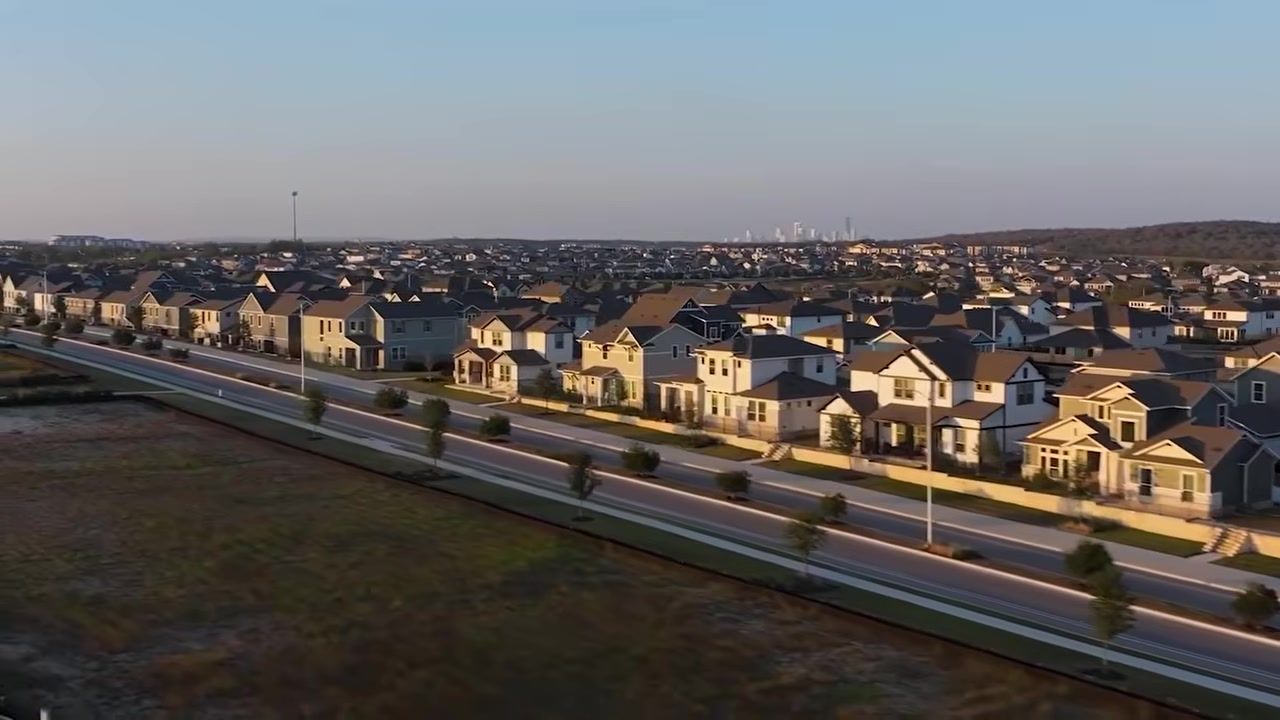
This can save you significant money on your property taxes, especially if you're moving from another state. Texas has what's called a residence homestead exemption. And essentially this reduces the taxable value of your primary residence for certain property taxes. So if you're buying a home here to live in full-time, this is something you absolutely want to look at. This is for occupied homes.
For 2026, Texas offers a $140,000 general homestead exemption for school district property taxes. And I want to walk you through what that actually means. Let's say you're buying a home for $500,000, and we're assuming that's also the appraised value used for taxes. Without a homestead exemption, your school district would calculate taxes on that full $500,000. But with the exemption, you subtract $140,000. That means you're now paying school district taxes on $360,000 instead.
Let's assume the school district tax rate is 1% just to make the math simple. Without the exemption, your school district taxes would be $5,000 annually. With the exemption, they would be $3,600. That's $1,400 you're saving per year. And that's about $117 per month. And that's just from the school district homestead exemptions.
How Exemptions Apply Across Tax Jurisdictions
Now here's something else I want you to understand. The $140,000 exemption does not automatically apply to every part of your property tax bill. Your county, city, MUD, and other tax jurisdictions may have different exemptions, and some offer additional savings. For example, Comal County currently provides a 20% optional homestead exemption for its county property taxes. So on a home appraised at $500,000, that could reduce the value subject to Comal County property taxes by $100,000.
That doesn't mean your entire home's taxable value is now $400,000 for every district. It means the county uses that reduced value for the county portion of the tax. The actual dollar savings depends on the county tax rate, and that's why I always want to look at the property's actual tax breakdown instead of just giving someone one generic tax percentage.
Over-65 Property Tax Benefits and the School District Tax Ceiling
This is especially important if you're already retired or you're planning on retiring here in Texas, because Texas offers additional property tax benefits once you turn 65. And there are really two big ones. The first one is an additional homestead exemption. The second one is something called a school district property tax ceiling, which a lot of people refer to as a tax freeze.
Let's start with the exemption for 2026. Homeowners who qualify as 65 or older receive an additional $60,000 exemption for school district taxes. That's on top of the regular $140,000 homestead exemption. So now you're looking at a total of $200,000 in school district exemptions, and that's usually the biggest chunk of your taxes.
Let's say that same $500,000 house. Without any exemptions, your school taxable value would be $500,000. With the regular homestead exemption, it would be $360,000. But if you're 65 or older and qualify for both, it drops to $300,000. Now let's say that same hypothetical 1% school tax rate. Without any exemption, school district taxes would be $5,000 a year. With the regular homestead exemption, they're $3,600 a year. But with the over-65 exemption, they drop to $3,000. So compared to not having an exemption at all, that's $2,000 annual school tax savings. And it's $600 more per year than you save with just the regular homestead exemption.
The School District Tax Ceiling Explained
Now remember, these are examples using a 1% school district rate. And this savings applies to your school district taxes. It doesn't mean every taxing district is reducing your home's value by $200,000. But here's where the over-65 benefit gets even more interesting. Once you qualify for that over-65 exemption, your school district taxes generally receive what's called a tax ceiling.
And this is something I think a lot of people misunderstand. Because I hear people say, well, once you turn 65 in Texas, your property taxes are frozen, right? That's not exactly how it works. It's generally your school district tax bill that's capped, not your entire property tax bill.
Let me give you an example. Let's say you turn 65 in 2026, and after your exemptions, your school district taxes are $3,000 for that year. That becomes your school district tax ceiling in this simplified example. Now let's fast forward to 2030. Property values have gone up, and based on your property's updated value and tax rate, your school district taxes would normally be $4,200. But because you qualified for that ceiling, you're generally not going to pay more than $3,000 in school district taxes. That's a significant benefit when you're trying to plan for retirement.
Certain cities, counties, and junior college districts also offer their own optional tax ceilings, but that does depend on the particular jurisdiction. So the biggest takeaway in this: turning 65 can provide significant savings and protection against rising school district property taxes, but you still need to budget for the rest of your property taxes and any PID assessments with your HOA fees and your insurance.
Moving to Texas After 65: What You Can and Can't Transfer
Let's talk about something that comes up a lot with relocation buyers. Let's say you and your spouse are 68 years old and you're moving from California, Arizona, or another state, and you're coming down to New Braunfels. You're selling your home and buying a $500,000 home here. You can qualify for Texas homestead and over-65 exemptions on your new primary residence if you meet the requirements, and you'll receive the school district tax ceiling once you qualify.
But there's an important difference between moving from another state and moving from another home within Texas. You can't bring a property tax ceiling from California to Texas. Your Texas school district ceiling gets established under the Texas rules for your new home.
Transferring Your Ceiling Within Texas
But what if you already lived in Texas? Let's say you've lived in Austin for 20 years. You're 70 years old, your kids are grown, and you've decided you're ready to downsize and move to New Braunfels, just like I did. Here's something a lot of people don't realize. You may be able to transfer the percentage benefit of your existing school district tax ceiling to your new Texas home.
And I want to explain that because it's not quite as simple as just transferring the dollar amount. Let's say your previous home's school district tax ceiling was $3,000. Without that ceiling, your school district tax would have been $4,000. That means you're paying 75% of what you otherwise would have owed. Now you move to a different home in Texas, and on that new home, let's say the school district taxes would be $5,000 after the applicable exemptions. Using the transferable percentage, your new tax ceiling could be $3,750. That's 75% of $5,000. So you're preserving that percentage benefit rather than starting completely over.
Now, there are rules and documentation involved. You'll want to work with your appraisal district to obtain the tax ceiling transfer certificate and make sure everything gets applied correctly. But this can be a valuable benefit for someone moving from Austin to Dripping Springs, Kyle, New Braunfels, or any other part of Texas. We get a lot of people coming from Houston and Dallas as well, and it's definitely something I'd want my retirement buyers to know about before they make a move.
The 10% Homestead Appraisal Cap
There's one more homestead benefit I want to cover because it often gets confused with the over-65 tax freeze. And this one isn't just for retirees. Texas generally limits how much the appraised value of a qualifying homestead can increase each year for property tax purposes. That limit is 10% annually, plus the value of any new improvements.
Let's look at an example. Let's say your home's capped appraised value was $400,000 last year. Now this year, the appraisal district determines that its market value has increased to $475,000. That's a pretty significant jump. But if your homestead qualifies for the 10% appraisal cap and there are no new improvements, the appraised value used for the taxes would generally be limited to $440,000, not $475,000. So you're getting some protection against that increase in appraised value.
But here's the important difference. The 10% cap does not mean your actual property tax bill can only increase by 10%. Your tax rates and exemptions can still change. And it also doesn't work the same as the over-65 school tax ceiling. The 10% cap limits the appraised value. The over-65 ceiling generally limits the school district tax amount. These are two different protections, and the appraisal cap generally begins in the tax year after you qualify for the homestead exemption.
Why Resale Tax History Can Be Misleading
This is also why you need to be careful looking at the tax history of a resale home. The previous owner may have lived there for 15 years and benefited from years of capped value. But when you buy that home, you don't automatically inherit all of the previous owner's appraisal protections. Your property may be assessed differently after the ownership has changed, which leads me into another really important mistake buyers make with new construction.
New Construction Tax Bills: Why Last Year's Taxes Don't Tell the Whole Story
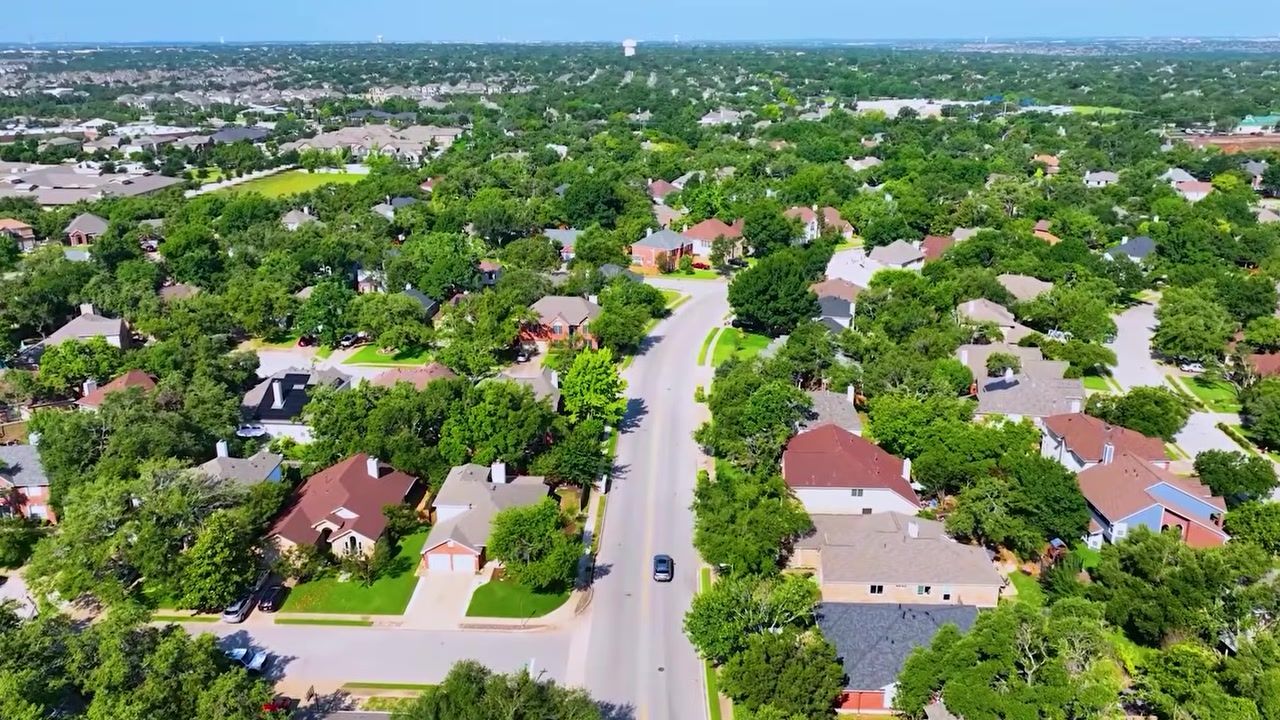
Here's another really important one, and I see how this can trip up buyers with new construction. Let's say you're buying a brand new home at $500,000. You're looking at the county's property tax records and you see that the previous year's taxes were only $1,500 or $2,000. That might sound amazing, but there's a good chance that those taxes were calculated when the property was mostly just a vacant lot or before the home was actually completed.
Texas generally appraises property based on its value as of January 1st. So if that home was still under construction at the beginning of the year, the prior tax bill may not reflect the value of a fully completed home. Once it's assessed with the completed home, the tax bill could be significantly higher. And if there's a PID assessment or a MUD involved, you need to account for that as well.
My Own New Construction Tax Surprise
Here's a simplified example, and I've actually been through this when I bought my first house. Let's say the previous year's property taxes were $1,800 because the home just wasn't complete yet. But after construction, the fully completed home has a taxable value of $500,000 before exemptions. At a hypothetical combined rate of 2.5%, that's $12,500 a year before your homestead exemptions. That's a major difference from the previous year's $1,800 bill.
And of course you qualify for homestead exemptions. Those need to be calculated separately from the taxing jurisdictions where they apply. But the point is you can't assume last year's taxes are what you're going to pay. That's why I never want someone budgeting for a new construction home based solely on last year's tax bill. And be careful with the online tax estimators as well.
Now what I can say is that when most lenders are putting your numbers together and you're looking at new construction homes and they're trying to assess the value of your taxes, they usually do a pretty good job of building your escrow account and calculating the actual tax value of the house with the house being built. When I bought my first house or built my first house, I had this problem. This was before I got into real estate. This was over ten years ago. We built our house. The taxes were valued very low. And then over the next couple of years, our mortgage payment went up because the taxes increased.
Let's just say the taxes were only like $2,000. Didn't think anything of it, bought my first house. And then the next year my mortgage went up like $300 or $400 a month. And then that next year, it went up another $200 a month. And usually if your taxes are not balanced, they're not accurately calculated, you'll see huge jumps in your payments throughout usually the first two years before it all kind of balances out with the appraised value and your taxes actually all balancing out. It was a big mistake that I learned when I bought my first house. And this is something I really try to educate my clients on and make sure that the lender is calculating everything properly so you don't have a significant jump in your payment over the first two years if you're buying new construction.
Which Cost Structure Is Right for You?
Now that we've gone through homestead exemptions, there's one more thing I want to connect back to the MUDs and the PIDs, because I don't want anyone thinking that they turn 65 or receive a $200,000 school district exemption and that automatically eliminates these other costs, because it doesn't.
Remember, the $140,000 general exemption and additional $60,000 for the over-65 exemption are only for school district property taxes. A MUD is a separate taxing district. Some districts may offer their own exemptions, but you have to verify that for that exact district. And a PID assessment is different from your regular property taxes. It's not a part of it at all. So those school district exemptions don't automatically reduce or eliminate your PID assessment.
Let's say you buy a $500,000 home and you qualify for the over-65 exemption. You may receive a significant reduction in your school district taxes, as we've been talking about. But if the property has a $3,000 annual PID installment, you're generally still responsible for that installment unless the specific assessment has been paid off or otherwise adjusted under its terms. And your MUD taxes may still be calculated on a different taxable value from your school district taxes.
What to Verify Before You Buy
This is why two people purchasing homes for the same price in two different neighborhoods could have very different property tax and assessment bills. And again, I'm not saying to avoid those communities. I just want you to understand exactly what you're purchasing and what you're going to pay every year. Again, this is the biggest question I get from buyers, especially moving from out of state or buying into new construction.
So here's what I would do before buying a home in any of these communities. First, find out every taxing jurisdiction that applies to that specific property, not just the city or the zip code, the actual property, because even homes with the same mailing address city can have completely different tax structures. Second, find out whether there's a MUD, a PID, or any other special district affecting your home. If there's a MUD, I want to know the current rate and whether the district has outstanding bonds or planned infrastructure costs. If there's a PID, I want to know the actual annual installment, the assessment balance, and the payoff information if it's applicable.
Third, review the required district notices and services and assessment plans. In Texas, sellers generally have disclosure obligations for these special districts, and there are specific notices that may be required before you even sign a contract. But I wouldn't wait until closing to understand all of these costs. Fourth, make sure your lender knows about the assessment. Don't assume that because a property has a lower advertised tax rate, your lender is automatically accounting for a separate PID installment in the estimated monthly payment.
Fifth, look at what exemptions you qualify for. If you're a primary resident, find out about the general homestead exemption. If you're 65 or older, make sure you understand the additional exemption and school district tax ceiling. And if you're moving from another Texas home, ask about transferring your existing ceiling. And finally, compare the total cost of ownership: the purchase price, mortgage payment, property taxes, PIDs, HOA fees, insurance, and any other ongoing expenses. That's how you can make a more informed decision between two different homes.
Conclusion
I want to make one thing clear. I'm not telling you to avoid MUDs or PIDs altogether. There are some really beautiful master-planned communities in Central Texas that use these districts to finance infrastructure, and they may offer the exact lifestyle you're looking for. I just want you to understand the question is whether that particular home with those particular costs makes sense for your budget.
Before buying a home in the Austin area or surrounding suburbs, don't just ask what the property tax rate is. Ask about the total annual taxes and assessments that are going to cost you. And make sure you're looking at the exemptions you qualify for because those can make a significant difference too, especially if you're moving here for retirement or you're trying to plan for your long-term expenses.
If you're considering a move to Austin, to San Antonio, anywhere in between or surrounding areas, or anywhere throughout the Hill Country, I would love to help you compare these options. I help families just like you make this move, and I absolutely love it. Give me a call/text me at 512-557-9576 to discuss your options or book a FREE consultation call so we can walk through your specific situation and make sure you understand every cost before you buy.
FAQ
What's the difference between a MUD tax and a PID assessment?
A MUD is a Municipal Utility District that levies property taxes to finance infrastructure, and it's built into your overall tax rate. A PID is a Public Improvement District that places a separate annual assessment on the property to fund public improvements. The PID is a separate payment from your property taxes, so you could have a lower advertised tax rate but still pay more once you add the PID installment.
Do MUD taxes ever go away?
They can change over time as developments progress and bonds get repaid, but that doesn't mean your MUD rate is guaranteed to go down. Some districts can issue additional bonds, and a district may continue operating even after certain debt is paid off. I typically do not see MUDs just going away, especially for the time that most buyers live in their house.
Can I pay off a PID assessment early?
Certain PID assessments are designed to repay the cost of specific public improvements, and the outstanding assessment may be paid off in full. You need to verify the exact terms for the specific property because not every PID is structured the same way. Some assessments fund ongoing services and may not be eligible for early payoff.
Will my homestead exemption reduce my MUD taxes or PID assessments?
The $140,000 general homestead exemption and the additional $60,000 over-65 exemption apply to school district property taxes. A MUD is a separate taxing district, and some may offer their own exemptions, but you have to verify that for that exact district. PID assessments are separate from your regular property taxes, so those school district exemptions don't automatically reduce or eliminate your PID assessment.
Can I transfer my over-65 tax ceiling if I move within Texas?
Yes. You may be able to transfer the percentage benefit of your existing school district tax ceiling to your new Texas home. If your previous ceiling was 75% of what you would have owed, your new ceiling would be 75% of the new home's calculated school taxes. You'll need to work with your appraisal district to obtain the tax ceiling transfer certificate.
Why are the taxes so low on a new construction home I'm looking at?
Texas generally appraises property based on its value as of January 1st. If that home was still under construction at the beginning of the year, the prior tax bill may not reflect the value of a fully completed home. Once it's assessed with the completed home, the tax bill could be significantly higher. Never budget for a new construction home based solely on last year's tax bill.
Steph Bartone
Austin native Steph Bartone helps clients buy, sell, and invest with local expertise, creative strategy, and personalized service rooted in trust, clear guidance, and a genuine love for her city.

Recent Posts