If you are moving to Austin TX, understand this first: the city you arrive in will not look exactly like the city five years from now. More than $40 billion in construction, expansion, transportation, corporate investment, and redevelopment is reshaping how Austin works.
This is not just skyline stuff. It affects commutes, job options, airport access, home values, and which neighborhoods make sense for your daily life. For anyone moving to Austin TX, the big question is not whether Austin will change. It is where that change will hit hardest and how to plan around it.
Key Takeaways
- Project Connect, I-35 reconstruction, and airport expansion will reshape mobility but also create years of construction.
- Samsung, Tesla, and Apple continue to support job-driven relocation and regional demand.
- Austin growth has slowed to roughly 2% annually, but the metro remains one of the nation’s fastest-growing major markets.
- Home prices have outpaced income growth, pushing more buyers toward Round Rock, Pflugerville, Cedar Park, Georgetown, Buda, and Kyle.
Table of Contents
- Transportation Changes For Moving To Austin TX
- Austin TX Growth and Major Employers
- Downtown Austin TX Redevelopment and Waterfront Growth
- Is Moving to Austin TX Still Worth It?
- Austin TX Home Prices and Suburbs
- What Austin TX Growth Means for Buyers
Transportation Changes For Moving To Austin TX
Getting around Austin is about to change in a major way, although it will not happen overnight. The most important thing to know is that transportation improvements also mean years of active construction. If you are moving to Austin TX , build that reality into your location decision.
Project Connect Light Rail
Project Connect, Austin’s planned light rail system, cleared a major federal hurdle when it received its Record of Decision from the Federal Transit Administration. That approval is important because it opens the door to federal funding.
The current plan calls for a 9.8-mile light rail line with 15 stations and an underground tunnel through downtown. The estimated price tag is $7.1 billion. Early construction contracts were awarded in February, with heavier construction expected to ramp up in 2027.
For buyers thinking long term, proximity to future stations could become a meaningful factor. But it is also important to be realistic. This is a long-range infrastructure project, not a quick fix for traffic next year.
I-35 Capital Express Central
The $4.5 billion I-35 Capital Express Central project is already underway. This is one of those projects that will touch daily life for a lot of people, especially anyone commuting through central Austin.
The MLK Boulevard Bridge is expected to wrap up this year, but the Lady Bird Lake Bridge segment is expected to begin in late 2026 and is not anticipated to finish until 2033. So, real talk, I-35 construction is not a short-term inconvenience. It is a multi-year part of Austin life.
When moving to Austin TX , do not choose a home based only on how a map looks today. Consider where you work, which routes you will use most, and whether a suburb can offer a more predictable commute for your lifestyle.
Austin Airport Expansion
Austin-Bergstrom International Airport is also in the middle of a $5 billion-plus expansion. Plans include 32 new gates, with Southwest serving as the anchor tenant for the new concourse. The West Gate section is expected to open later this year.
This matters for frequent travelers, business relocations, and anyone who wants better airport capacity as the metro continues to grow. Austin’s infrastructure is trying to catch up to the demand created by years of rapid expansion.
Austin TX Growth and Major Employers
Austin is not growing because of one company or one industry. There is a serious pipeline of investment across chips, electric vehicles, AI, aerospace-related work, and technology. That is a big reason people are increasingly relocating for specific jobs rather than simply chasing the Austin lifestyle.
Samsung’s $17 billion chip factory in Taylor is working toward full operations by the end of 2026. The site is expected to have about 1,500 permanent employees by year end and grow toward 1,800 direct jobs over the next decade.
Tesla is continuing to expand Gigafactory Texas, adding another 5.2 million square feet by the end of 2026. There is also a proposed North Campus tied to a joint venture involving SpaceX and xAI, with a chip fabrication project estimated between $20 billion and $25 billion.
Apple’s second North Austin campus is also still under construction. The $1 billion, 133 acre campus is working toward 15,000 employees at full capacity. For anyone moving to Austin TX for a job, these employment centers can influence whether North Austin, East Austin, Taylor, Round Rock, or another nearby community fits best.
That said, not every corporate story is a straight line upward. Oracle has shifted its world headquarters toward Nashville, even though it remains technically based in Austin. That is worth noting because the honest story of Austin is not that every business is moving here. It is that major investment is still happening, even as companies make individual strategic changes.
Downtown Austin TX Redevelopment and Waterfront Growth
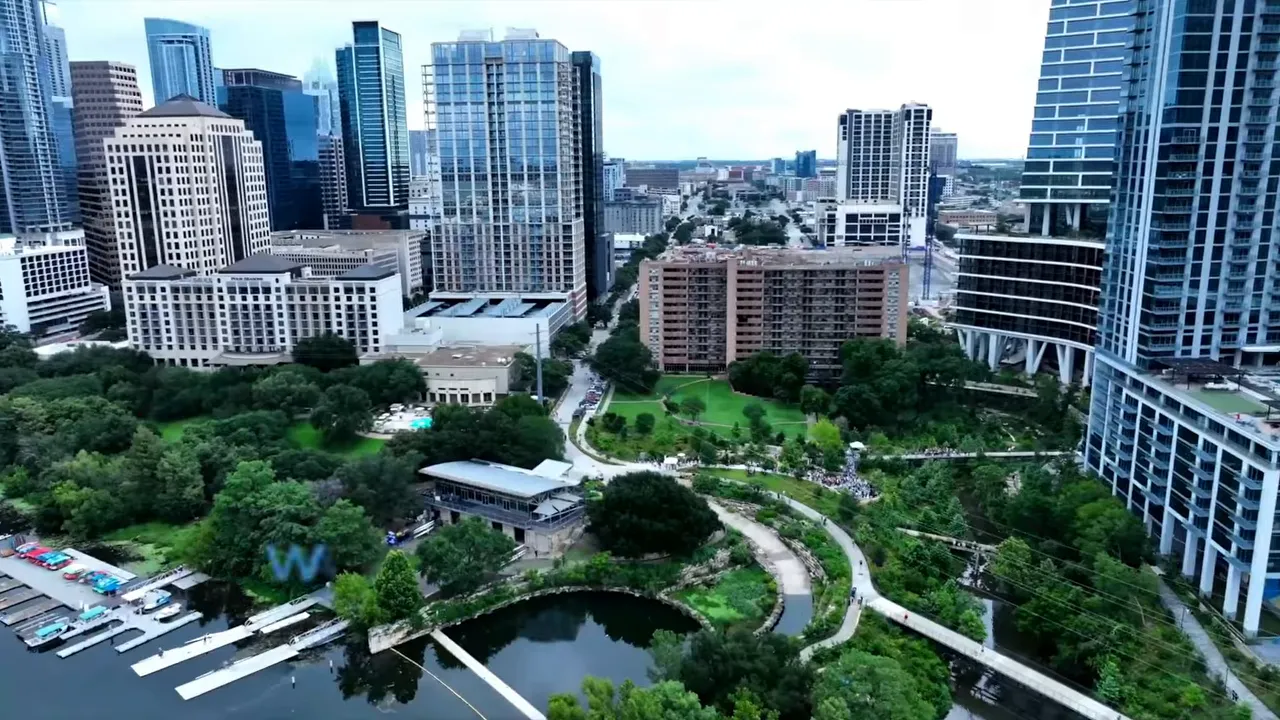
Downtown is being rebuilt from the ground up. That means construction, cranes, detours, and a skyline that will remain in motion for years. If your goal when moving to Austin TX is a polished, fully finished downtown experience, just know that Austin is still actively building it.
The Austin Convention Center is undergoing a $1.6 billion rebuild, expanding from 365,000 square feet to 620,000 square feet. The new convention center is not expected to open until spring 2029.
South of downtown, the South Central Waterfront is being incorporated into the larger Central City District vision. The city is combining downtown, West Campus, and the waterfront into one long-term planning framework.
One approved waterfront project brings 950 homes, 600,000 square feet of office space, a 225-room hotel, and retail to a 6.5 acre site along the water. That is the kind of mixed-use density that will keep changing central Austin’s character.
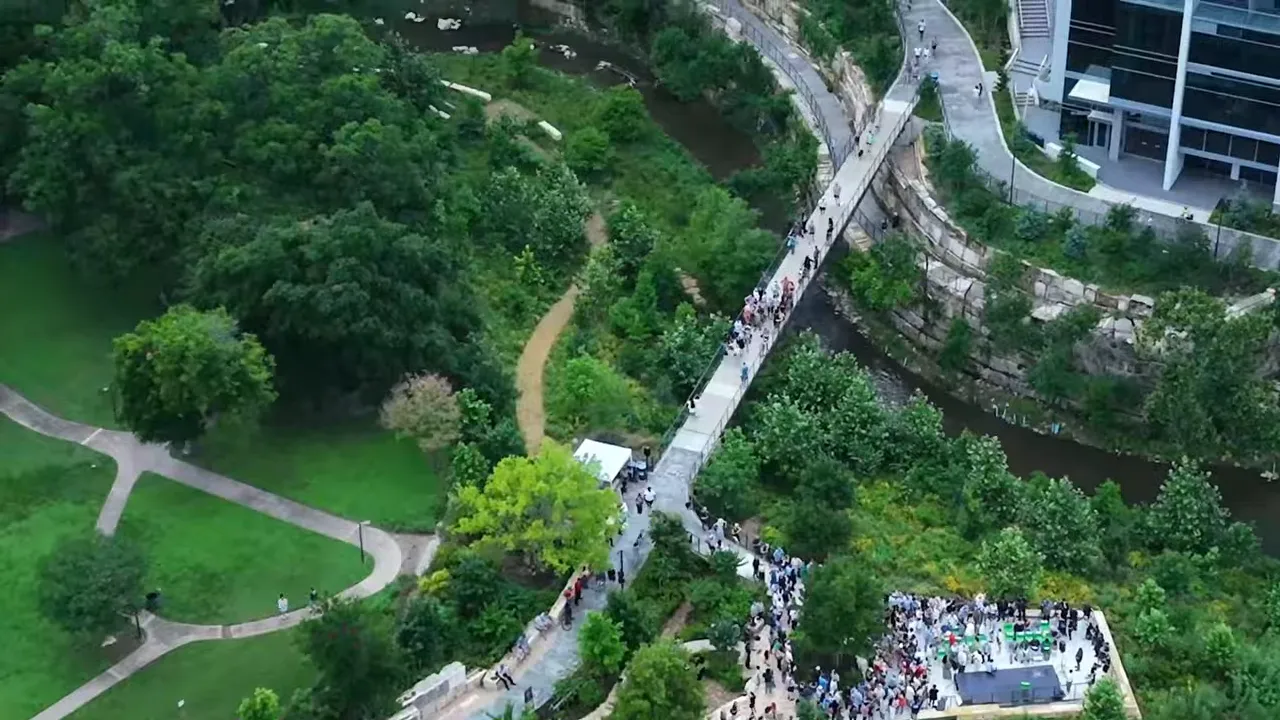
Waterloo Greenway has already delivered its second phase, called The Confluence. It added 13 acres of parkland along Waller Creek and is part of a planned mile and a half green space that will ultimately connect downtown to Lady Bird Lake.
This is why Austin TX growth and development is not just about offices and roads. It is also about creating more connected public spaces in the core of the city.
Is Moving to Austin TX Still Worth It?
Here is the honest answer: Austin’s growth has cooled from the wild, headline-grabbing pace of its peak years, but it has not collapsed. The number to watch is roughly 2% annual growth.
Over the last year, more than 145,000 people moved into the Austin metro from somewhere else, equal to about 6.6% of the population. Austin remains among the country’s top metros for net migration since 2020.
So no, the boom is not over. It is stabilizing. There are people leaving, absolutely, but there are still plenty of people coming in. For someone moving to Austin TX , that can actually be a healthier environment than the frantic rush of a few years ago.
The composition of newcomers has shifted, too. More relocations are connected to a specific employer, including Tesla, Apple, and Samsung. Lifestyle still matters, of course, but job-driven migration creates a more grounded reason for people to stay connected to the region.
Austin TX Home Prices and Suburbs
The affordability conversation is real. Over the last decade, median household income increased 21%, while median home prices increased 40%. That income-to-price gap is a huge part of why so much demand has spilled into the suburbs.
Round Rock, Pflugerville, Cedar Park, Georgetown, Buda, and Kyle are drawing people who want access to Austin jobs without taking on Austin-level home prices. For many households moving to Austin TX , the right answer may be a suburb with the commute, community feel, and budget that actually line up.
Do not make the mistake of treating every suburb as interchangeable. Each one connects differently to Austin’s job hubs, highways, schools, new construction, and daily lifestyle. Austin TX growth and development is spreading across the metro, not staying contained inside city limits.
What Austin TX Growth Means for Buyers
If you are moving to Austin TX , plan for a city that is still full of potential and still changing in meaningful ways. The growth rate has leveled out, but the scale of active transportation projects, corporate investment, downtown redevelopment, and suburban demand tells a much bigger story.
The practical move is to look beyond a home’s four walls. Think about the employment center tied to your move, the roads you will rely on, future construction around your neighborhood, and whether you want to be near the core or closer to a growing suburb.
Austin is not standing still, and that is the point. The people who plan with that in mind will be much better positioned to choose the right neighborhood pocket for the years ahead.
Frequently Asked Questions About Moving To Austin TX
Is Austin still growing in 2026?
Yes. Growth has slowed from peak years but is expected to level out around 2% annually, while the metro continues to attract job-driven relocations.
What major transportation projects are changing Austin?
The major projects include Project Connect light rail, the I-35 Capital Express Central overhaul, and Austin-Bergstrom International Airport’s expansion.
Which companies are investing heavily in the Austin area?
Samsung is expanding its Taylor chip factory, Tesla is growing Gigafactory Texas, and Apple’s second North Austin campus remains under construction.
Why are buyers considering Austin suburbs?
Median home prices have increased faster than median household income, leading many buyers to seek access to Austin jobs from suburbs with comparatively lower housing costs.
Thinking about moving to Austin TX and want to make sure you’re choosing the right area for your lifestyle, commute, and budget? Call/text me at 512-557-9576 to discuss your options or book a FREE consultation call to get personalized guidance and learn which Austin-area communities may be the best fit for your move.